
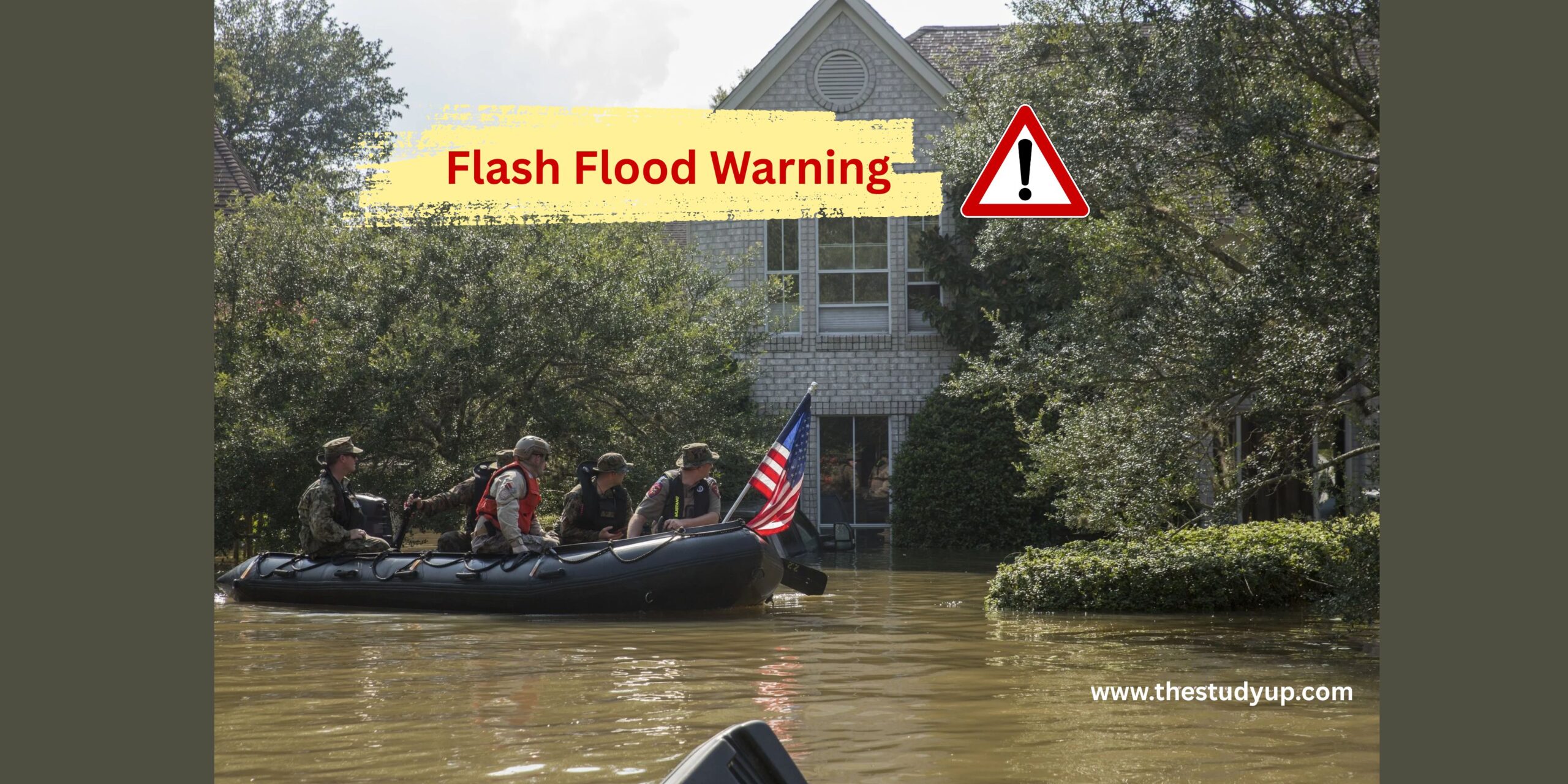
Flash Flood Warning is sudden and dangerous events that can happen anywhere in the United States. They develop quickly, often within minutes of heavy rainfall, and can catch people off guard.
Each year, the National Weather Service issues flash flood warnings to alert the public when immediate danger is present.
A flash flood warning means that flooding is already happening or is about to begin very soon. This is not the time to wait and see what happens. Quick action is necessary to stay safe. Flash floods can be caused by strong thunderstorms, hurricanes, or rapid water release from dams. Because they form so fast, there may be little time to prepare once a warning is issued.
Data from the National Oceanic and Atmospheric Administration shows that flash floods are a major cause of weather-related deaths in the country. The biggest danger is the speed and force of the water. It can rise rapidly and move with enough power to knock people down and carry away vehicles.
If you receive a flash flood warning, move to higher ground immediately. Avoid areas that are low or close to water, such as rivers, streams, and basements. If you are indoors, be ready to leave quickly if local officials advise evacuation. It’s also wise to keep a basic emergency kit with items like drinking water, food, medications, and a flashlight.
A key safety message to remember is “Turn Around, Don’t Drown,” promoted by the National Weather Service. This means you should never try to walk or drive through floodwaters. Even shallow water can be dangerous. Just a few inches of moving water can make you lose your balance, and about a foot of water can sweep a car away. In many cases, roads hidden under water may be damaged or completely washed out.
Driving during heavy rain can also be risky. If you come across a flooded road, choose another route. If your vehicle becomes stuck in rising water, leave it behind and get to a safer, higher place right away. Staying inside the car can increase the risk of being trapped.
Urban areas such as Houston and Phoenix often experience flash flooding because rainwater cannot soak into the ground easily. Streets and drainage systems can quickly become overwhelmed during intense storms.
Weather patterns are changing, and experts warn that heavy rainfall events are becoming more common. This increases the risk of flash flooding in many parts of the U.S., including areas that may not have experienced it before.
Staying informed is one of the best ways to stay safe. Pay attention to weather updates and alerts on your phone, TV, or radio. Understanding the difference between a flood watch and a warning can also help you respond faster.
Flash floods can be life-threatening, but being aware and acting quickly can reduce the risk. When a warning is issued, don’t delay—move to safety and protect yourself and your family.
Read Also:-